Your Business Already Sells What the Government Buys: Everyday Products and Services Small Businesses Can Sell
If you run a cleaning company, a catering kitchen, a trucking outfit, a print shop, an IT support business or a consulting practice, you already sell something the federal government buys. The government spent about $793 billion on contracts in fiscal year 2025, on everything from software to consulting to aircraft carriers, and a large share of that money is set aside by law for small businesses like yours. The question isn't whether the government buys what you sell. It's whether you're set up to be the one it buys from.
Want the step-by-step path from "I run a small business" to "I'm ready to bid"? See what's inside the 5-Day Government Contracting Challenge (live from December 7).
The biggest customer in the country buys ordinary things
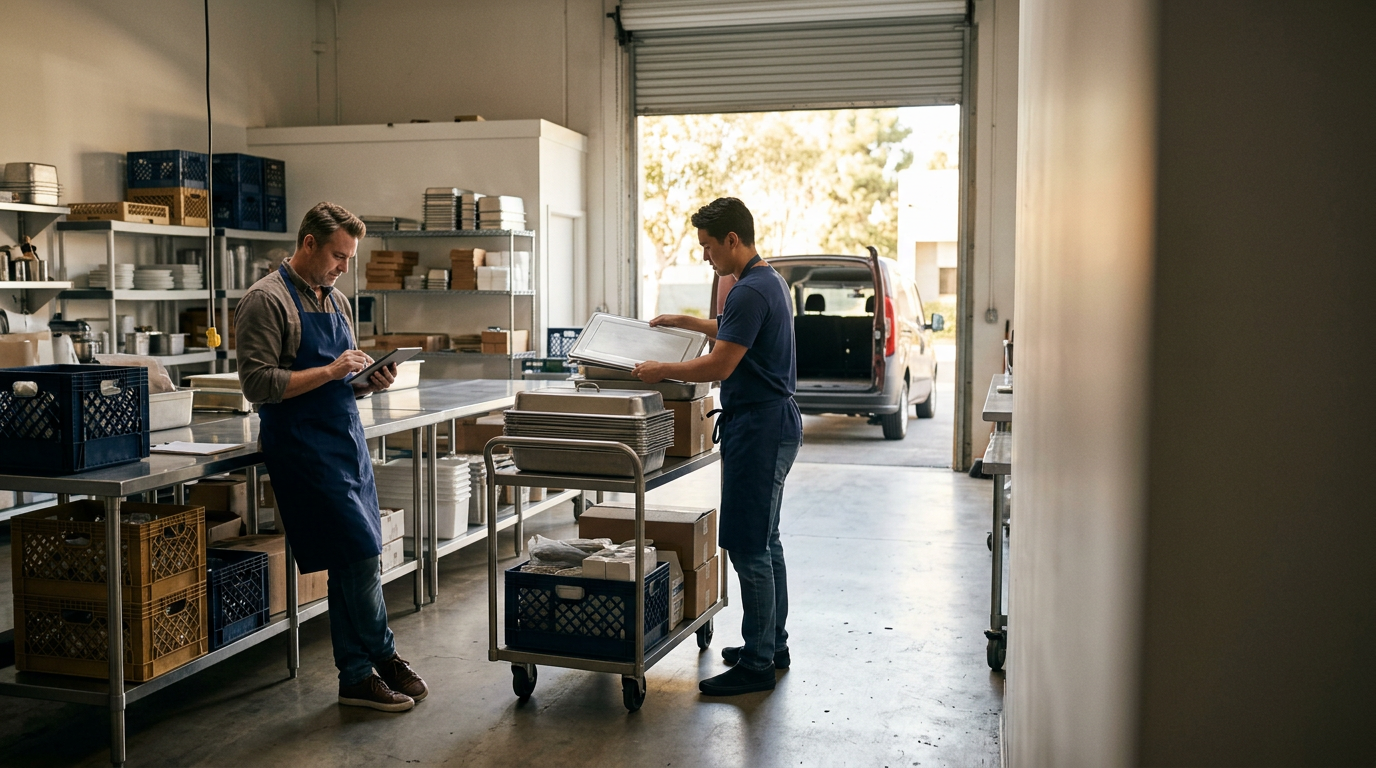
The U.S. Small Business Administration describes the federal government as the largest customer in the world. It buys every type of product and service, in big orders and small ones. Every purchase is tagged with a Product and Service Code, the government's own catalog of what it bought, and that catalog reads a lot like a list of everyday small businesses:
- Facilities: janitorial and custodial work, landscaping and grounds care, pest control, minor repairs.
- Food: catering for events and trainings, food and kitchen supplies.
- Moving things: trucking, freight, courier and moving services.
- Supplies: paper, cleaning products, office furniture, safety gear, tools.
- Print and marketing: printing, signs, promotional materials.
- Technology: help desk support, networks, software, cybersecurity.
- Professional services: consulting, training, bookkeeping, staffing.
If your business fits anywhere on that list, you are not a stranger to this market. You're a supplier it hasn't met yet.
What your business gains by adding the government as a customer
A share of the market reserved for small businesses
Federal law sets a goal that at least 23% of prime contract dollars go to small businesses each year. In fiscal year 2025, agencies beat that goal: nearly 28% of prime contract dollars, about $179 billion, went to small businesses. Counting subcontracts as well, small businesses received nearly $273 billion. That is money the system is built to steer toward companies your size.
Fewer competitors on set-aside work
Some contracts are reserved entirely for small businesses, so large companies can't bid on them at all. The SBA also runs programs for women-owned, service-disabled veteran-owned, HUBZone and 8(a) businesses, and it notes that taking part in these programs means competing against fewer businesses for the contracts reserved for them.
Revenue that helps you hire and grow
This isn't small change for the businesses that win it. The SBA estimates that small business prime contracts in fiscal 2025 supported about 793,400 jobs, with subcontracts supporting another 418,000. Government orders can be the reason a two-person shop adds a crew, a second truck or a full-time office manager.
A customer that publishes its shopping list
Private customers rarely tell you what they'll buy next year. Federal agencies do. Each agency publishes a procurement forecast that lists upcoming contracting opportunities for small businesses, and USASpending.gov shows what the government has already bought and from whom. You can see the demand before you spend a dollar chasing it.
Credibility that builds on itself
The SBA points out that the government prefers to work with established, reliable businesses with a track record of delivering on time and on budget. Every order you deliver well becomes part of that record, and it's a record you can show the next agency, a large prime contractor looking for subcontractors, or a commercial client who wants proof you can handle bigger work.
Ready to put your business in front of the biggest buyer in the country?
In five live evenings you'll register the right way, pick the codes that describe what you sell, find open opportunities, line up suppliers and build a bid. Live from December 7, 6:00 PM ET. One-time enrollment: $97.
How to find out what the government already buys from businesses like yours
- Name what you sell in plain words, then find your NAICS code. NAICS codes classify businesses by the product or service they supply. Most businesses have a primary code and can list more if they sell several things. The Census Bureau's NAICS list is the place to look.
- Check that you count as "small." The SBA sets a size standard for each NAICS code. Most manufacturers with 500 or fewer employees, and most non-manufacturers averaging under $7.5 million in annual receipts, qualify, with exceptions by industry. The SBA's Size Standards Tool gives you the answer for your code.
- Look up who already buys it. Search USASpending.gov for your product or service to see which agencies bought it, how much they spent and which businesses won. This is free market research most competitors skip.
- Read the agency forecasts. The procurement forecasts on Acquisition.gov show upcoming buys, so you can line up the agencies that need what you sell.
- Register in SAM.gov so buyers can find you. Registration is free, and it's the database agencies search for contractors. The SBA compares your SAM profile to a résumé, so describe what you do clearly.
- Start with smaller orders and build. Winning a first contract can take time, so keep serving your commercial customers while you build. Each delivered order adds to the track record that wins the next, larger one.
Don't make the product yourself? You can still sell it
Many businesses that sell to the government don't manufacture anything. They find what an agency needs, find a reliable supplier or subcontractor who can provide it, and put together a competitive offer. If you're good at organizing, sourcing and following through, that is a business in its own right.
Get your business government-ready in 5 days
The Government Contracting Challenge walks you through it live, one evening at a time, starting December 7 at 6:00 PM ET. Day 1 covers how the government buys and the connector model. Day 2 gets you registered on SAM.gov the right way. Day 3 positions your business with the right NAICS codes and a one-page capability statement. Day 4 shows you how to find contracts and line up local subcontractors. Day 5 walks you through reading a solicitation and building your bid. If you don't have a registered business yet, Day 1 helps you get started too.
Join the 5-Day Government Contracting Challenge
Sources
- U.S. GAO: Federal Contracting (FY 2025 contract spending)
- U.S. GAO: A Snapshot of Government-Wide Contracting for FY 2025
- SBA: FY25 Scorecard for Small Business Contracting
- SBA: Contracting guide (benefits of government contracting)
- SBA: Get started with contracting (market research, SAM, NAICS, size standards)
- SBA: How to win contracts (set-asides and contracting programs)
- Acquisition.gov: Agency procurement forecasts
- Acquisition.gov: Product and Service Code (PSC) Manual
- USASpending.gov
- SAM.gov